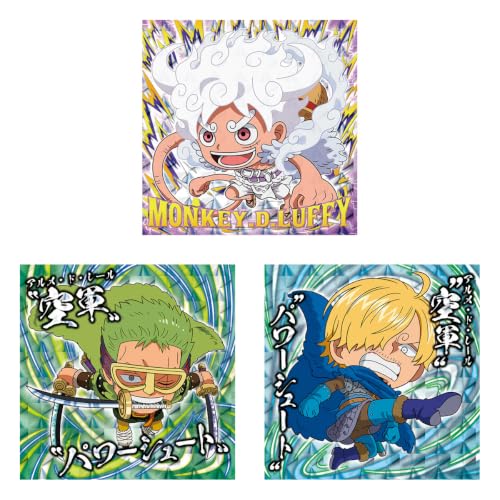
In Japan, the candy aisle of a supermarket or convenience store has small boxes with a figure, a sticker or another toy, packed with a piece of gum, a wafer or other candy. These are shokugan (食玩), sometimes called candy toys in English.
In short:
- Shokugan are toys sold with a small snack, on candy shelves in Japan.
- The toy is the reason people buy them. The snack is small.
- They include food, so check your country’s rules before you order from outside Japan.
Table of Contents
What is shokugan?
“Shokugan” is short for shokuhin gangu (食品玩具), “food toy.” Each pack has a toy and a small snack, and it’s sold as food, next to the candy.
- The toy comes first. Figures, stickers, and small model kits based on anime, games and other characters.
- The snack is small. Gum, ramune candy or a wafer.
- Often a surprise. In many lines, you can’t see which character is inside until you open the pack.
Kinds of shokugan
The toy decides the kind. Some common ones:
- Stickers (seal wafers). A wafer packed with one sticker. More below.
- Cards. A card packed with a snack. For example, Bandai’s Itajaga packs a metallic plastic card with a thin potato snack.
- Figures. Small painted figures packed with gum or candy. For example, Bandai’s Pokémon Kids are soft vinyl figures packed with soda-flavored gum, sold since 1996.
- Acrylic stands and other character goods.
Most lines come out in numbered sets (vol. 3, LOG.16 and so on), each with its own lineup of characters, often including rare and secret ones.
Seal wafers
A seal wafer (シールウエハース) is a wafer packed with one sticker (seal in Japanese English). The stickers are the collectible part.
- Each pack has one wafer and one sticker.
- The back of the sticker shows the character’s information and how rare the sticker is.
Example: Niformation One Piece Great Pirate Seal Wafer LOG.16 (Bandai, December 31, 2026)
- The Straw Hat crew in their outfits from the Elbaf arc, plus a second theme: childhood scenes.
- Rare stickers include 5 “5th” rare stickers for the series’ fifth anniversary, 3 other parallel stickers and 2 secret stickers.
- Sold on Amazon.co.jp as a box of 20 packs.
Buying a box
Shops in Japan sell shokugan one pack at a time or as a box (BOX販売). A box holds a set number of packs, such as 20.
- On Amazon.co.jp, shokugan are usually sold by the box.
- A box gives you many stickers at once, but we haven’t confirmed whether one box always includes every sticker in the set.
Things to know
- They include food. Some countries limit food sent from abroad. Amazon.co.jp’s product page tells you whether it will ship the item to you, but your country’s customs rules are separate. See How to Order from Amazon Japan to Your Door.
- Best-before dates. The snack has a best-before date (賞味期限). See the next section.
- The text is in Japanese. Character information on stickers and packs is in Japanese.
Reading the best-before date
Food labels in Japan use one of two dates:
- 賞味期限 (best-before): the date until which the food keeps its full quality, if you store it as the label says. The food may still be good after this date.
- 消費期限 (use-by): only on food that doesn’t keep long. Don’t eat the food after this date.
Shokugan snacks keep for a long time, so they show 賞味期限, not 消費期限.
Amazon.co.jp’s product page doesn’t show the best-before date. Check the date on the pack before you eat the snack. Shipping from Japan takes time, so the date may be close when the item arrives.
- Wafers and other snacks usually keep for a few months to about a year from when they’re made. The date is printed somewhere on each individual pack.
- Gum may have no date. Japan’s labeling rules let gum go without one, because its quality hardly changes.
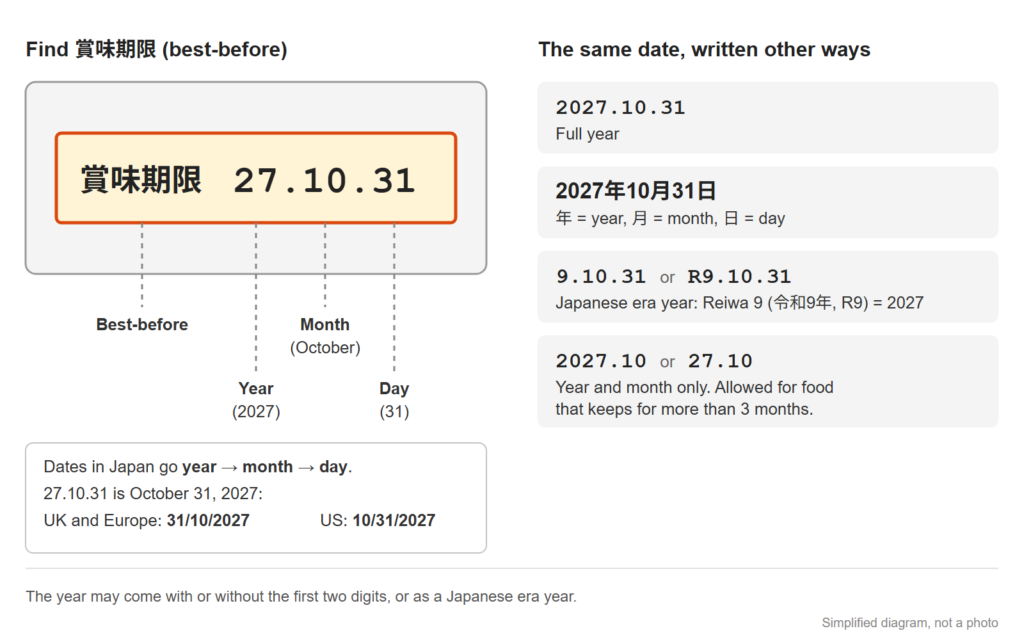
- Look for 賞味期限 (“best-before”).
- The date goes year → month → day. 27.10.31 is October 31, 2027: 31/10/2027 in the UK and Europe, 10/31/2027 in the US.
- Most dates use the Western year, in full (2027) or as its last two digits (27).
- Some use the Japanese era year: Reiwa 9 (令和9年) is 2027, written 9.10.31 or R9.10.31.
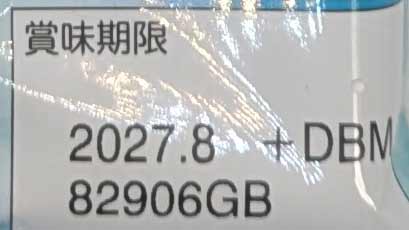
- Food that keeps for more than three months may show only the year and month (2027.10).
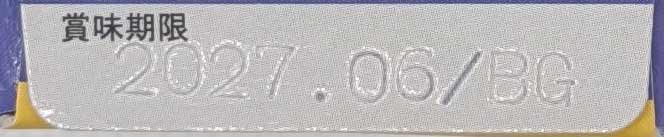
Two labels from packs we bought. Both show only the year and month. The letters and numbers after the date are not part of the date.
Compared with other countries
賞味期限 is the same as “best before” elsewhere. 消費期限 is like “use by”: it goes only on food that doesn’t keep long, so shokugan don’t have it.
| Japan | EU and UK | US | |
|---|---|---|---|
| Best-before (may still be good after) | 賞味期限 | Best before | Best by, Best if used by |
| Use-by (food that doesn’t keep long) | 消費期限 | Use by | Use by |
| Date order | Year, month, day | Day, month, year | Month, day, year |
Watch the order: read the UK and European way (day, month, year), 27.10.31 would look like 27 October 2031.
What we haven’t verified
We live in Japan, so we can’t test ordering from outside Japan and having an item delivered.
- Which countries accept shokugan, and whether customs stops them
- Whether one box always includes every sticker in a set
- How long the best-before date is for each product
Tell us
Ordered shokugan from Amazon.co.jp? Tell us your country and whether it arrived through the Contact page. We’ll add it to this guide as “reported by a reader” (country and date only, never your name or email).
On this site
- Shokugan we list are in Shokugan.
- How to order: How to Order from Amazon Japan to Your Door